


Optical Fiber Draw Tower: Process Control and Measurement Systems
SCOPRIRE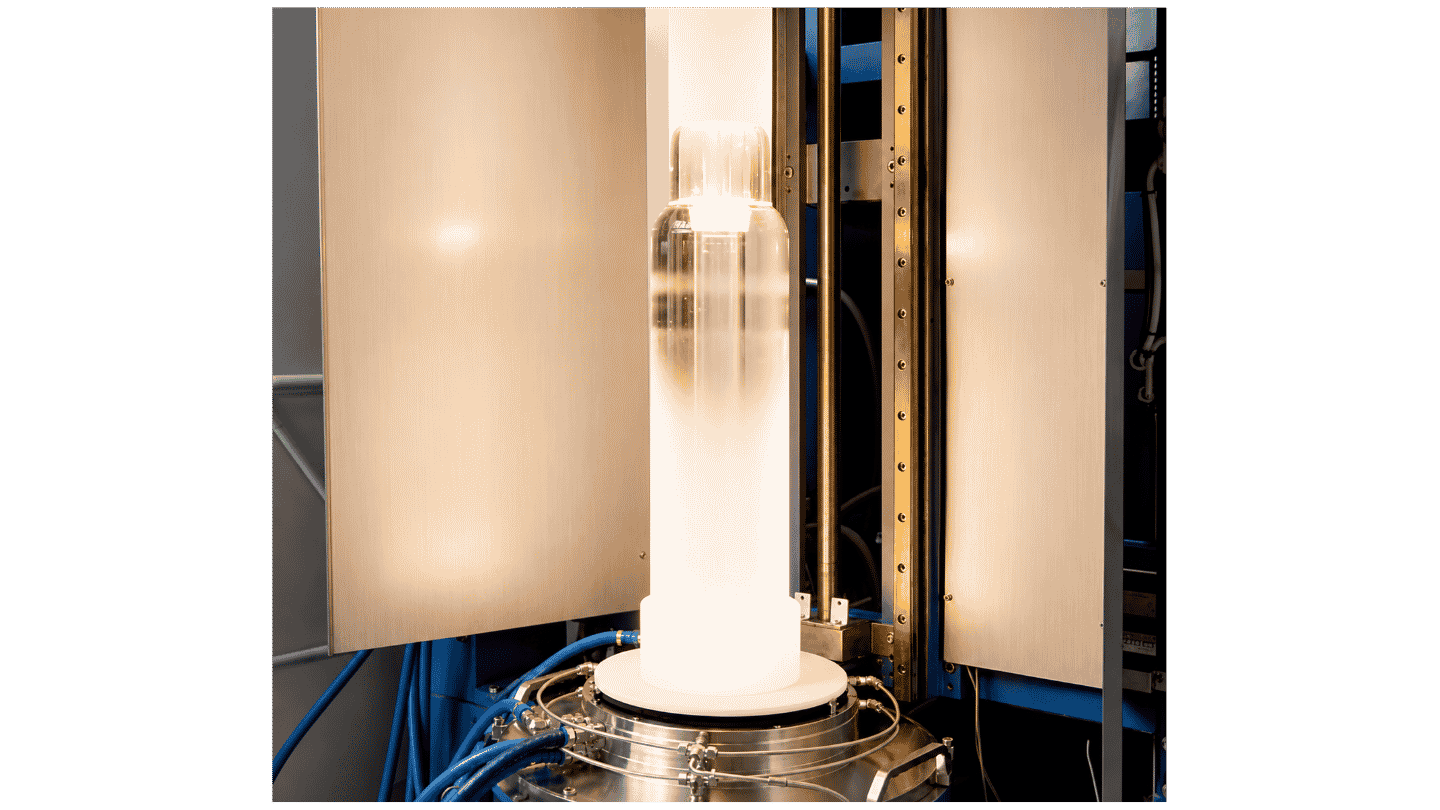
Optical fiber production relies on highly controlled draw tower processes to ensure consistent product quality and performance. In order to meet the growing demand for optical fibers used in telecommunications and data transmission, manufacturers around the world have developed highly efficient fiber production facilities. Although the optical fiber manufacturing process is generally similar across the industry, achieving consistent fiber quality and long-term performance requires precise process control and reliable measurement systems.
What Makes Up a Fiber Draw Tower?
Optical fiber is produced from a large multi-layer glass cylinder called a preform. This preform is positioned vertically at the top of a draw tower, where it is heated until the glass softens and begins to form a thin fiber.
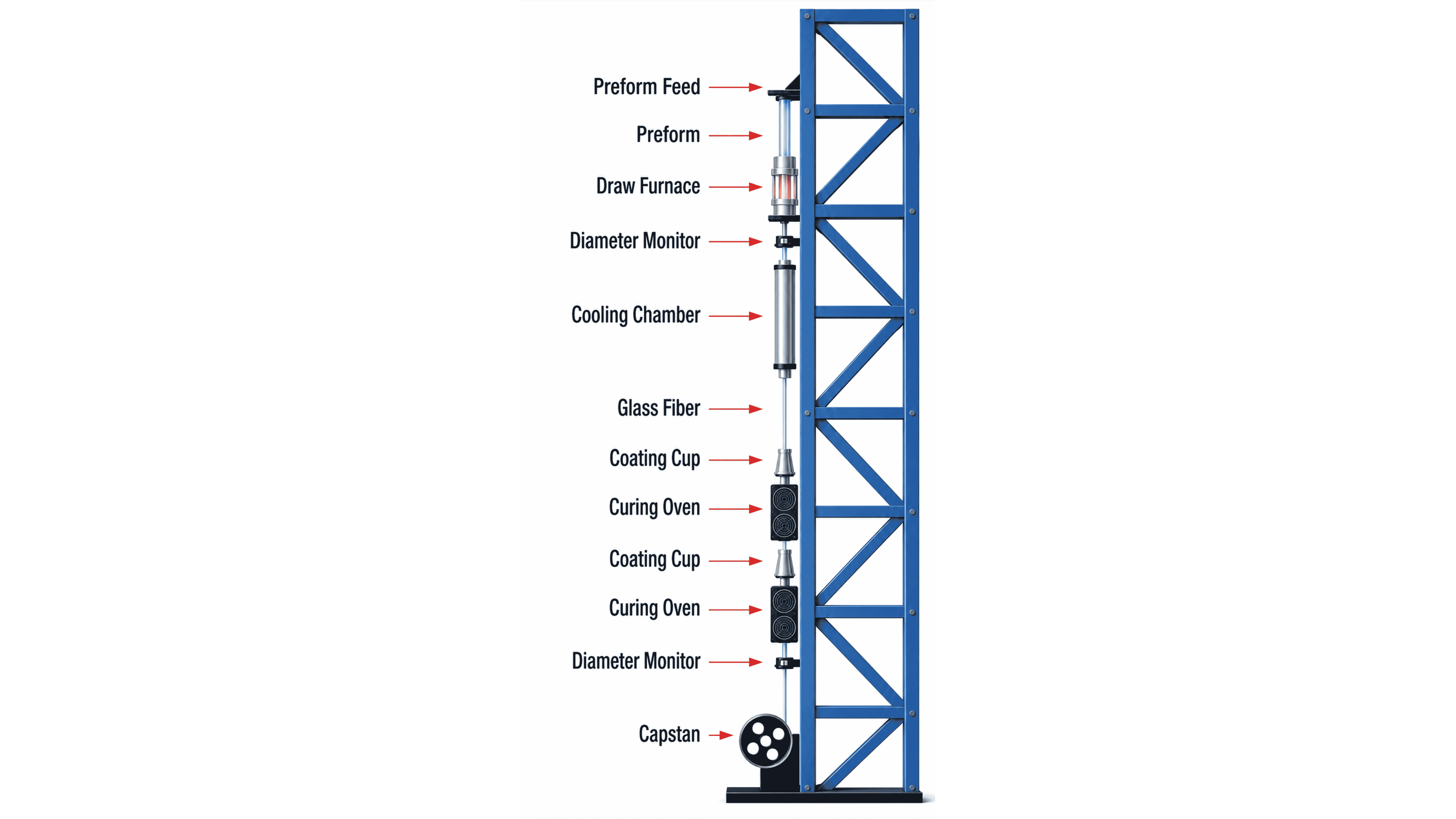
Modern fiber draw towers are typically between 30 and 45 meters high and include several stages designed to control the manufacturing process. A furnace heats the preform, a cooling system stabilizes the fiber temperature, coating applicators protect the fiber surface and curing systems ensure coating integrity before the fiber reaches the capstan and winding equipment.
Today, many manufacturers use high-intensity UV LED curing systems to improve energy efficiency and reduce space requirements on the production line.
Controlling the Drawing Process
Accurate process control is essential to ensure stable production conditions and consistent fiber quality. Throughout the draw tower, measurement systems continuously monitor key production parameters and provide data used for process optimization and quality assurance.
Key Measurement Parameters in a Fiber Draw Tower
Several parameters must be monitored continuously during fiber production, including bare fiber diameter, coated fiber diameter, tension and alignment. Accurate measurement systems help manufacturers maintain stable production conditions and ensure consistent fiber quality.
Measurement systems installed along the draw tower are commonly used for:
• Bare fiber diameter measurement
• Coated fiber diameter measurement
• Fiber position and alignment control
• Fiber tension monitoring
• Internal defect detection within the glass and coating layers
• Lump and neckdown defect detection on final coated fiber
The information collected by these systems is transmitted to production control systems for real-time monitoring, process adjustments and quality analysis.
The Role of Measurement Systems in Fiber Draw Towers
• Ensure stable fiber diameter throughout production
• Detect process deviations in real-time
• Improve fiber quality and product compliance
• Reduce production losses and downtime
• Support high-speed optical fiber manufacturing
Because fiber production operates continuously and often runs 24 hours a day throughout the year, measurement systems must combine high reliability, high accuracy and high-speed performance. With production speeds typically reaching around 3,000 m/min and industry targets moving toward 5,000 m/min, these capabilities are essential to maintain product quality while supporting ever-increasing line speeds.
Learn more about our LISG optical fiber diameter measurement systems
Discover our NCTM optical fiber tension measurement solutions
Explore our fiber optic measurement and control solutions
Contact our team to find the best measurement solution for your fiber draw tower application
I nostri articoli correlati
.jpg)
Contatta l'azienda CERSA MCI
Hai una specifica esigenza di controllo e misurazione?
Cerchi un dispositivo di controllo ad alte prestazioni?
Desideri richiedere uno dei nostri servizi?


